March 2026: The Dos and Don’ts of Economic Impact Analysis
What Really is Economic Impact?
The term “impact” is often used in community and economic development settings. “Impact” alone is one of those words you never want to see on a Pictionary card. It is simultaneously abstract and overly specific. When paired with “economic” (yet another loaded term that carries a crushing weight of baggage), the potential for confusion multiplies. In a general sense, people often mash the words together when describing how a business or organization interacts with the local community. This isn’t a terrible description, but it isn’t technical enough to pass muster among practitioners of Economic Impact Analysis (EIA). We need to maintain a mental distinction between economic impact in a general sense and “economic impact” as economists use the term.
"In a general sense, people often mash these words together when describing how a business or organization interacts with the local community. This isn’t a terrible description, but it isn’t technical enough to pass muster among practitioners of Economic Impact Analysis (EIA)."
To economists, EIA is a measure of how a business affects a local economy using common metrics such as job and tax creation, benefits that can be exclusively attributed to that business and would not have been otherwise realized. This is sometimes called the “but for” test of economic impact: but for the existence of that business, those benefits would not exist.1 Once this distinction is understood, it becomes clear that general conceptions (such as a company’s total annual spending or employment) are related to economic impact but conceptually distinct from it.
Typical Metrics
EIA can estimate impact either for an existing business (ex post) or for a business that has yet to enter a regional economy (ex ante). EIAs can be generated by competent economists and analysts using a variety of software tools.2 The real work for the analyst lies in correctly specifying industries and applying the aforementioned “but for” tests. Once the data are inputted into the EIA model, the model generates results for a core set of metrics. The “four horsemen” that appear in virtually every EIA include:
 Jobs
Jobs
Generally includes both full-time equivalents (if certain positions are seasonal or part-time).
 Earnings
Increased income to persons directly and indirectly affected by the business, broadly including salaries, wages, and profits.
 Output (or Sales)
The value of all increased economic transactions attributable to the business.
 Tax revenue
Increased tax revenue, typically including property, personal property, income, and sales/use taxes. In some EIAs, this may also include room/lodging taxes, food/beverage taxes, and various other excise tax categories (e.g., gasoline, tobacco products).3 Naturally, various governmental entities are the recipients of this revenue, so greater specificity is preferable.
How to Not Irritate Communities with EIAs
A more technical way of explaining the “but for” concept is that a proper EIA must consider “counterfactuals.” By way of analogy, imagine your life if you were not working in your chosen profession. Currently, you have the income and specific economic advantages that come with that job. Without it, you would still exist and would likely earn income from other sources. Therefore, the economic impact of your job must be considered in the context of alternative economic possibilities that are equally realistic. If you have followed this far, you now grasp the concept of “counterfactuals” as it applies to economic impact analysis. Virtually all aspects of economic impact methodology are designed to account for this.
Negative Externalities & How to Respond
When considering industrial developments, it is important to consider the concept of externalities. These can be either positive or negative, but in the context of EIAs the term often carries a negative connotation. In the process of weighing the quantitative benefits of a business, you must consider potential economic costs (even if they are intangible or difficult to quantify). One well-known example of externalities is the impact of the Exxon Valdez oil spill on Alaska in 1989.
Some of the most common concerns community members may raise include:
Strain on local resources: increased traffic congestion, strain on waste management, excessive water usage, etc.
Property-related effects: visual blight, boom-and-bust housing cycles (as construction workers move into and out of the region), and the crowding out of other industry types.
Environmental effects: air pollution, light pollution, habitat destruction, soil contamination, etc.
Property valuation concerns: changes in neighborhood character that may affect nearby residential property values.
You may be correct in calling a report an “economic impact” analysis even if it does not quantify all of these elements in dollar terms. However, local skeptics and critics are not out of bounds in pointing out that such factors can carry very real economic consequences. For this reason, many industrial developments are asked to fund related or adjacent studies before communities extend the hoped-for economic development embrace.
Cautions on Common EIA Abuses
"The average citizen may not be an economist, but they are thoughtful observers of their own community. People are often quite adept at sensing when something does not align with local realities."
Complaints about EIAs often amount to, “Well, that may be true, but they are not saying anything about a X very pressing specific concern that I have.” The average citizen may not be an economist, but they are thoughtful observers of their own community. People are often quite adept at sensing when something does not align with local realities.
For this reason, other forms of criticism often arise. Beyond omissions, economic impact studies can also be misinterpreted, overstated, or misused. The following are additional ways such analyses can be mangled, twisted, or abused:
Intentionally obscuring short-term vs. long-term impacts: Construction projects can generate significant jobs and earnings, but these effects are often temporary. The challenge for EIAs is that construction jobs do not last indefinitely. Highlighting x-thousand construction jobs may make for an attention-grabbing headline, but most citizens intuitively understand that construction itself does not generate a product or service that has long-term economic value. Simply building, demolishing, and rebuilding structures can create jobs.
Furthermore, critics of industrial development increasingly emphasize these short-term population booms as stressors on already constrained housing markets. While there is nothing inherently wrong with considering short-term effects, they should be clearly presented and should not overshadow the long-term, sustained economic contributions of a business’s ongoing operations.Improper discounting for out of region spending: Not all sales and expenditures occur within the local economy. As a result, only a portion of them contributes to the “net new” benefits for the community and should be discounted to reflect the true economic impact.
Consider this example of a grocery store in a remote area. Imagine a model assuming that the store sourced 100% of its inventory from within a 40-mile radius. Not only would that scenario be unrealistic (you probably wouldn’t want to buy those bananas!) but it also calls into question the credibility of the resulting economic impact study.
- Not balancing results against reality: For a variety of legitimate reasons, it’s easy to miss the mark on an EIA, either by overestimating (producing numbers that are too high) or underestimating (producing numbers that are too low). Both carry risks, but an overestimated model is particularly likely to put a new business at odds with local residents and council members.
A notable example involves professional baseball spring training in Florida. An analyst once projected an astronomically high economic impact of $75 million, but it was later revealed that the analyst was colluding with the client to inflate the numbers in order to justify a $65 million tax incentive. Naturally, this made negotiations much more difficult for proponents of the new ballpark.
- Poor transparency on project specifics: This type of misuse can take many forms, but the underlying issue is transparency. Some community members may be impressed by large projected tax impacts, while others will ask practical questions: How long will they use that building? What impact will it have on the environment? How long will it realistically take to outfit and fully operate? The key is to share what information you can without overpromising favorable outcomes. People often respond better to honest statements like “Here’s what I think, but I don’t know for sure.”
Shifting Priorities Within Economic Development
Twenty years ago, economic development was focused almost exclusively on one metric: jobs. Today, the landscape has shifted. Our demographic pyramid is increasingly inverted, meaning there are fewer workers available to replace those retiring now or over the next decade. In many areas (particularly exurban and rural locations) non-workers outnumber the available workforce.4
To these demographics industries that generate significant tax revenue, require substantial land, and do not depend heavily on a large working-age population often look very attractive on paper. Elderly populations typically rely on those tax revenues to support local services, and land constraints are usually minimal. However, some communities more closely resemble what much of America looked like in the 1980s, with a plentiful workforce and an eagerness for new employers. States such as Tennessee, Texas, and Utah, for example, often fit this profile and remain focused on traditional priorities (“jobs, jobs, jobs”).
Another factor consistently on the minds of both elected officials and economic developers is the cost burden of increased infrastructure and ongoing maintenance. Maintenance pain can be acute for Cities and Counties. This is partly due to unprecedented increases in installation costs and partly because much existing infrastructure is reaching the end of its useful life. For example, over the past five years, water system construction costs have risen 45%. This is nearly double the rate of the consumer price index! Furthermore, most of the systems installed during the last major population boom (1950s–1970s) were built using approved, lowest-bid technologies of the time. Many are now deteriorating.
Government agencies are prohibited from passing development costs onto a corporation unless a clear nexus can be shown between the company’s operations and increased infrastructure needs. This is the purpose of Impact Fee analyses. That said, communities are acutely aware of their infrastructure challenges and may be eager to welcome companies that are willing to cover their share of costs. They may be especially eager if it exceeds what is strictly required, since this benefits other users as well.
To conclude, the traditional economic development mantra of “jobs, jobs, jobs” has informally evolved into a new emphasis: Revenue! Infrastructure! Jobs!
"The traditional economic development mantra of “jobs, jobs, jobs” has informally evolved into a new emphasis: Revenue! Infrastructure! Jobs!"
Endnotes
______
[1] Incidentally, you may have seen the terms “net new” or “but for” embedded in state regulations related to economic development incentives. This is language that stems from economists’ contributions to this field.
[2] The most common of which include IMPLAN, REMI, RIMS II, and Lightcast.
[3] Although certain software programs can generate generic figures, a quality analysis should not simply be labeled as “taxes.” Local stakeholders, such as County Commissioners, have every reason to want to know which funds will remain in their coffers, rather than those that flow to the state capital or Washington, D.C.
[4] Technically speaking, non-workers include people under 18 years of age, retirees, disabled persons, and discouraged workers (those who have given up looking for work). Many factors contribute to these categories, but the proportion of community members over age 65 is the single biggest factor.
[5] Ahmed Rachid El Khattabi, “Accounting for Inflation in Water and Wastewater Capital Planning,” Environmental Finance Center (UNC School of Government), November 25, 2025, accessed January 26, 2026, https://efc.sog.unc.edu/accounting-for-inflation-in-water-and-wastewater-capital-planning/.
PC News
New & Ongoing Projects
New! Cochise County Continuing Care Retirement Community (CCRC) Feasibility Study, Copper Queen Community Hospital Foundation (AZ)
NEW! Medical University of South Carolina (MUSC) Economic Impact Analysis, MUSC (SC)
New! Impact Fee Consulting (ID)
New! Columbus Housing Needs & Supply Study, City of Columbus (NE)
New! Housing Action Plan, City of Ridgway (CO)
Douglas County Comprehensive Plan Update & Industrial/Commercial Lands Assessment, Anchor QEA and Douglas County (WA)
Myrtle Beach Benchmarking, Project Grand Strand and Aha! Advisors, Myrtle Beach (SC)
Fort Myers Athletic Center Feasibility Study, Card & Associates Athletic Facilities, Fort Myers (FL)
Chelan Comprehensive Plan Updates and Land Capacity Analysis, Anchor QEA and City of Chelan (WA)
FFA Strategic Plan Environmental Need Scan, National FFA Organization & Schunk Moreland Strategies
City of Cheney Comprehensive Plan, City of Cheney Planning Department (WA) & Nexus Planning Services
Ketchikan Indian Community Comprehensive Economic Development Strategy (CEDS), Ketchikan Indian Community (AK)
Places We've Been This Month

Boise, ID
Our team went to Boise twice this month! Brian attended the Idaho Building Owners and Managers Association (BOMA) symposium (left). Speakers touched on the topics of attracting emerging talent, the future of property management, and the economic forecast for commercial real estate in Idaho, to name a few.
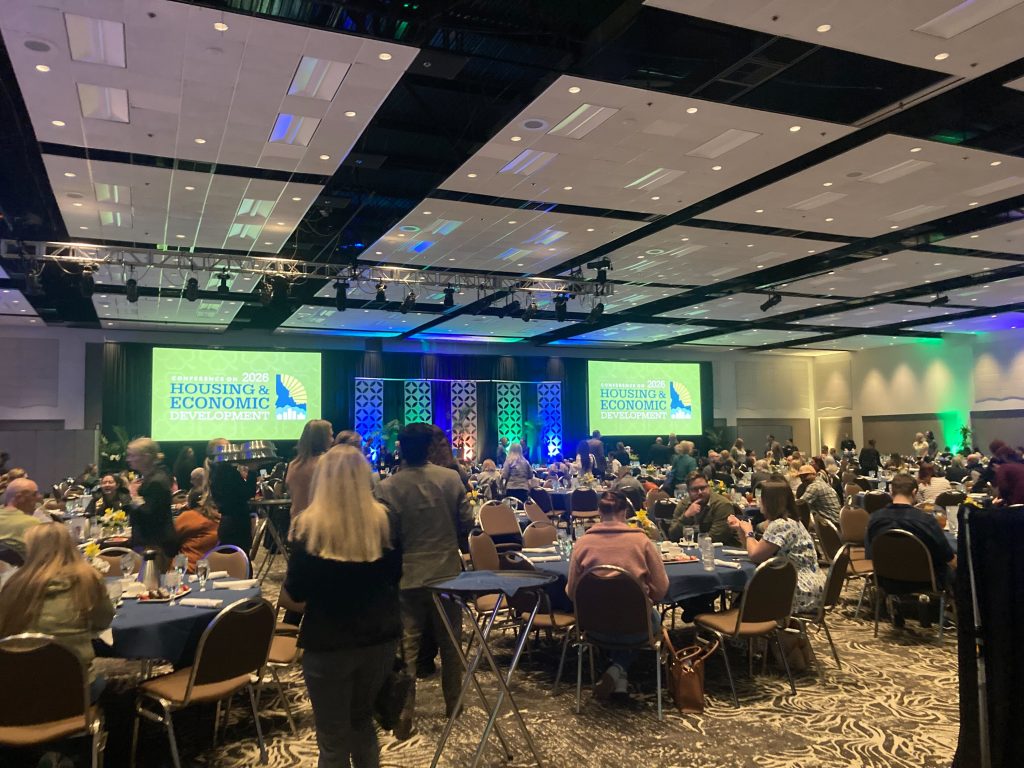
On behalf of PC, Robyn also traveled to Boise to attend the 2026 Conference on Housing and Economic Development (below). The event provided an opportunity to learn about the latest trends from industry experts and network with housing professionals. They also discussed some economic snapshots for Idaho provided by Zion’s Bank.
Lapwai, ID
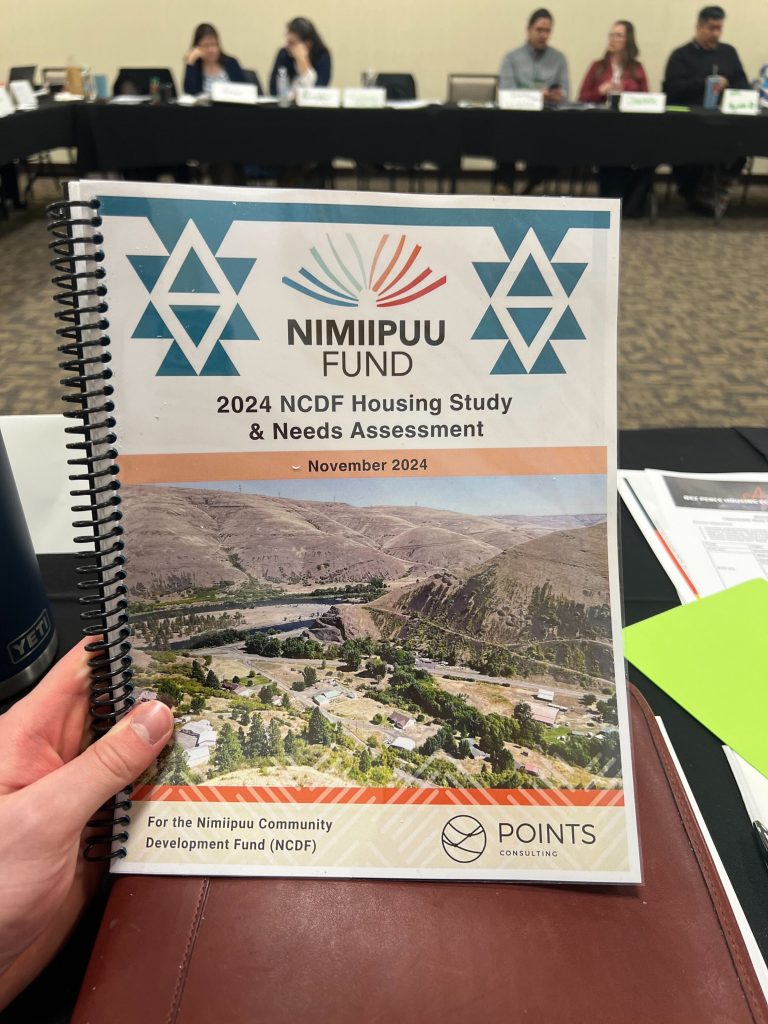
Dylan presented key findings from our 2024 Nez Perce Housing Needs Assessment at a housing strategy session put together by the Nez Perce Housing Authority and Nimiipuu Community Development Fund (NCDF). We are grateful for the opportunity to catch up with old friends in Lapwai and revisit the Tribe’s nation-building goals!

Interesting Finds
Why controversial HOAs may become a thing of the past in Florida – Mike Bedigan
The Land Trap – Mike Bird
AARP Survey: Older Adults Want to Stay in Home, Community – Suzette Lohmeyer
Balancing Growth and Affordability: The Role of Impact Fees on the Housing Crisis | Novogradac – Peter Lawrence and Ankita Goel
Monthly Economic Snapshots | Zions Bank – Zions Bank
Austin’s Surge of New Housing Construction Drove Down Rents | The Pew Charitable Trusts – Liz Clifford, Seva Rodnyansky, and Dennis Su
More Newsletters: