
January 2026: Managing Short-Term Rentals for the Long-Run
What Should Local Government Do?
There has been a large increase in the number of housing units across in the United States being set aside for short-term rentals (STRs). Which makes us wonder, what are the costs and benefits of STRs to communities?
Pros & Cons
Resort communities in high amenity areas have seen real and substantial effects on the cost and availability of workforce housing due to STRs. This trend is often more acute in smaller towns with already relatively limited housing inventory. Hence, most of our local government clients see nothing but downsides with STRs, which typically include the following:

- The “slippery slope” of zoning code allowances
- Further restricting availability of housing options for local workers
- Potential escalation of housing costs
- Potential displacement of residents when units are converted to STRs
- Reduced quality of life for neighbors (i.e. “party houses”, unfamiliar traffic, noise pollution, etc.)
- Lack of accountability on safety issues (i.e. occupancy, fire-hazards, etc.)
- Potentially unequal playing field for lodging and other types of taxes
- Erosion of community/neighborhood identity
To combat these very real issues local governments turn to regulation. Not all regulations are bad, but one of the challenges of regulation is that markets never sit still long enough for regulation to have its intended effect. With STRs, as soon as a policy is adopted, the market will find a work-around. Furthermore, what many local officials may not realize is that the market itself is still very immature. Many homeowners are drawn to the appeal of some extra cash on the side, but it may take a few years to realize the downsides— high degree of wear and tear to the unit and furnishings, financing challenges,1 and, frankly, the hassle of managing 50 to 100X more tenants than a long-term rental. All this explains why many operators eventually eschew the STR option, converting the units back to long or moderate-term rentals after the first few years.2
Seeking to regulate STRs in the current market is a bit like trying to regulate the DVD industry in the 1990s. At the best, you are establishing reasonable guidelines for the next iteration of the industry. At the worst, you’re burning up a lot of time and energy on polices that will become obsolete or obstructive very quickly.
In midst of this controversy, it is worth spelling out some of the positive (or at least economically neutral) impacts of STRs on local communities. In short, these may include:

- Net new tourism spending from people who won’t stay at hotels but will stay at STRs, (i.e.: larger parties and big families)
- Economic and tax impact of visitors to small towns that lack other hospitality options
- Stimulating neighborhood investment/reinvestment
- Deployment of space for productive use that would otherwise be vacant or underutilized (e.g., “empty nesters” and starter homes)
- An additional source of income for residents (particularly young households who otherwise could not afford to buy)
- Reduced demand for lands zoned for large-scale commercial and/or highway business
Wave Pools vs. White Chocolate Mochas: Getting Real About Housing Supply
First and foremost, PC understands the concerns that STRs may be limiting the potential stock of housing affordable for residents. But the concern that every STR is one less home for a local family is not borne out in economic reality.
By way of analogy, let’s say that a local resident wants to see a water-park open in their city. After a few years of not seeing this come to fruition, they start criticizing the abundance of coffee shops in town — which, this person claims, are crowding out space that could otherwise be used for waterslides and lazy rivers. I think most of us would immediately recognize this as ridiculous, but we may not realize that the same argument is often used to combat STRs. The reason that there is no water park has nothing to do with the coffee shops (for which there is obviously high demand and sufficiently low barriers to entry) and everything to do with the water-park market.
When STRs are made a boogeyman, it often displaces blame for the lack of intentionally-designed workforce and affordable housing policies, an issue that is better addressed through zoning code and land use reform, adoption of builder incentives, and attraction of affordable housing developers.
Outside of regulation, whether a unit has a real pathway to something other than an STR depends on factors such as location, square footage, bedroom number, parking availability, and building character. Not to mention the single biggest factor — what does the owner of the home actually want to do with the space that they own. Making it harder for them to use their home as an STR does not automatically mean that the space would otherwise be used for as a long-term rental. It could simply go un- or under-utilized.
Another point in the “pro” column for STRs relates directly to our friends in broadly rural, tourism-based economies. Some communities are too small or too remote to come off as impressive on pro formas for large hotel chains. In this sense, STRs might be the only pathway for increasing tourism spending and lodging taxes for that community. (The Points Consulting team has found ourselves staying at STRs in such markets a time or two, either to save on cost or to drive our spending back to our host community).
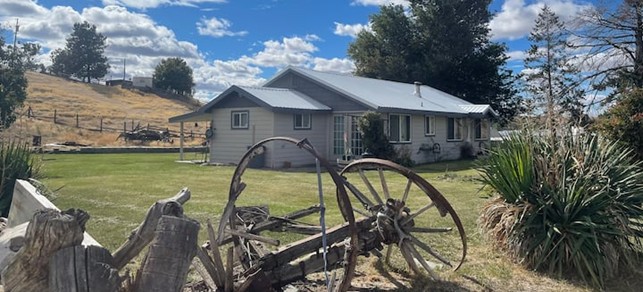
This fine establishment was the only unit available within a 45-minute radius of our project site. Marriott and Hilton have no interest in places like Lexington, Oregon.
Some STR Statistical Evidence
Beyond takeaways from our own projects and experiences, there are data-driven analyses representing benefits of STRs as well. In 2019, Oxford Economics completed an economic impact analysis of AirBNB guest activity across 30 select communities.3 The study concluded that among these 30 large cities across the world, Airbnb activity supported more than 300,000 jobs.
There is further evidence that the expansion of STR activity can spur investment in neighborhoods as well. Using econometric research methods and the 2016 Chicago Shared Housing Ordinance, a study analyzing effects in Chicago show several interesting results:
- A 1% increase in Airbnb listings raised:
- the number of residential renovation projects by 0.5%
- the value of retail renovation investment by 3.7% in the following quarter
- the net growth of liquor, retail food, and entertainment business licenses by 2.1%, 3.9%, and 0.8% respectively
What’s more, the authors found these investment effects to be more prominent in declining neighborhoods.4
The Downsides
While some of the experiences we’ve shared and studies we’ve reviewed may paint a somewhat pleasant picture, there can be significant costs to STRs as well. Evidence in Chelan County, WA shows concerning community-level impacts.5 Chief among these is that an increase in STRs undeniably reduces the housing stock available to local workers. A whole home STR used for visitors to the community cannot at the same time be used for workers in the local community.6 Tourism-oriented communities where the use of STRs has increased, but infrastructure (e.g., roads and parking) and amenities (e.g., restaurant capacity, parking at popular trailheads or beaches) have not significantly changed see decreased quality of experience for tourists and decreased quality of life for residents due to overcrowding and congestion.
Commercial use of STRs can impact the price of housing as well. In his book Homesick (2023), Brendan O’Brien shares what he has seen of the impact of STRs on communities, specifically Flagstaff (AZ), Bozeman (MT), and St. George (UT). In all of these heavily tourism-based economies, the affordability of housing (cost relative to income) is becoming an issue. The main cause for this is the housing market becomes driven by speculation from commercial/investment property sellers and buyers figuring out how much they can earn using a property for short-term renting.7 The real-life effect of this speculation is that a residential property can now also be tied to commercial real estate revenue expectations. This pushes costs even higher when many households already cannot afford prices for strictly residential uses.
Conclusion and Suggestions on How Regulation Could be Improved
Limitations on STRs can be justified via zoning for the same reason that hotels are not allowed across the street from your grandma’s house: there are places within certain neighborhoods where intense STR usage is just not suitable. However, the idea that limiting STRs will produce a large-scale benefit for affordable housing is sadly misguided.
Considering the overall costs and benefits, we wonder if STRs could be regulated in a more market-friendly way. Currently, many regulations cap STRs within a certain zoning district or geographic radius. Though this will prevent STRs from overwhelming a community, these policies generally lead to higher-cost, lower-quality STR experiences while resulting in deadweight loss.8 Economists have found work arounds that allow producers to do a “bad” thing in exchange for doing a “good” thing for society, all while passing on a monetary benefit. Similar to how states regularize the “right to pollute,” STRs could be regulated via a similar cap-and-trade system. In such a case, another STR operator may outbid an existing operator for their license. In such a case, STR operators would need to produce a profit by creating a superior experience, and part of that surplus could be siphoned off into some form of affordable housing fund that fixes the root problem, namely the lack of affordable housing. Nobody has tried it yet as far as we can tell, so let this be your call to action!
Endnotes
______
[1] Various conversations with mortgage brokers and underwriters indicate that the genre-bending nature of STRs leads to problems in loan generation. Income produced by this means may help homeowners with expenses, but it generally cannot be used to improve a loan.
[2] Ryan Squires, “Why more vacation rental hosts are becoming landlords,” 95.5 WSB Atlanta’s News & Talk, https://www.wsbradio.com/news/why-more-vacation-rental-hosts-are-becoming-landlords/4YHIJHRFQFNQHGCSYXOIRYY2TM/.
[3] “2019 Airbnb Guest Community Supported 300,000 Jobs in 30 Communities,” Oxford Economics, 2021, https://news.airbnb.com/wp-content/uploads/sites/4/2021/05/Airbnb_2019_Economic_Impact_Report.pdf.
[4] Minhon Xu, Yilan Xu, “What happens when Airbnb comes to the neighborhood: The impact of home-sharing on neighborhood investment,” Regional Science and Urban Economics, Volume 88, 2021, 103670, ISSN 0166-0462, https://doi.org/10.1016/j.regsciurbeco.2021.103670.
[5] Kirvil Skinnarland, MS, MBA and Brian Patterson, Ph.D., “How Short-Term Rentals in Residential Areas Harm Communities,” Residents Coalition of Chelan County, accessed January 20, 2025, https://coalitionofchelancounty.org/wp-content/uploads/2022/09/How-Short-Term-Rentals-In-Residential-Areas-Harm-Communities-May-20-2021.pdf.
[6] Evidence in Los Angeles suggests that fewer STRs leads to lower rents for long-term units. Increased supply of long-term units, and therefore decreased displacement risk, lead to lower rents: https://doi.org/10.1016/j.jue.2021.103356.
[7] Roshan Abraham, “Running Rampant: How Short-Term Rentals Affect Communities with Loose Restrictions,” Shelterforce, accessed January 20, 2025, https://shelterforce.org/2024/02/22/how-short-term-rentals-affect-communities-with-loose-restrictions/.
[8] According to neoclassical economics, deadweight loss is when the market is prevented from meeting equilibrium. In this case, resulting in a loss of both consumer and producer surplus.
PC News
Merry Christmas & Happy New Year
from the Points Consulting Team!

Recently Completed Projects
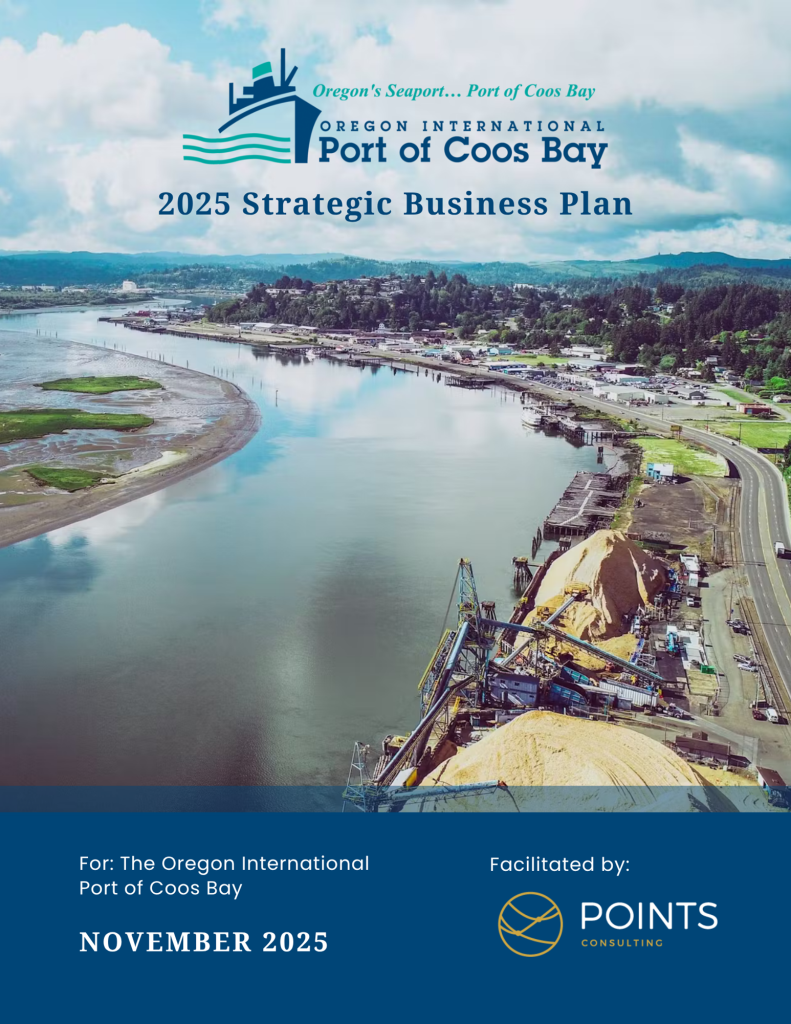
Oregon International Port of Coos Bay, Strategic Business Plan, OR, 2025
In an effort to update the Port’s main strategy-guiding document, PC completed a Strategic Business Plan (SBP) for Oregon International Port of Coos Bay in 2025. The SBP is comprehensive, focusing on all of the Port’s main lines of business: Marine Operations, the Coos Bay Rail Line (CBRL), and the Charleston Marina Complex. The Plan culminated in a Strategic Direction & Action Plan with 12 main goals to lead the Port into the future, and a Capital Improvements Plan for Port Leadership and Commissioners to consider in order to enhance their operations.
In accordance with OAR 123-025-0016, the SBP also includes a full overview of the Port’s broad inventory of properties and assets, along with a SWOT analysis. PC also analyzed the Port District’s demographic and economic profiles to identify pain points and potential opportunities for economic diversification. The project team was involved in significant community engagement as the Port hoped to ensure the public had input on the results. For engagement, PC deployed a community survey, facilitated a public open house, and interviewed multiple groups and individuals throughout the region. Throughout the project, PC also completed several workshops with the Port Commissioners during the public Port Commission Meetings, ensuring the planning process was open and transparent.
Fredonia High Gap Reserve Properties Highest & Best Use Analysis , Sequatchie County, TN
We finished a Highest and Best Use Study (HBU) for a property in Sequatchie County. We considered what is Financially Feasible, and Maximally Productive for the two properties totaling 272 acres in Sequatchie County, Tennessee. To identify possible uses for the Property, PC first performed a thorough site and regulatory review. This involved examining encumbrances, local comprehensive plans, and zoning review. PC then looked at the housing demand and supply of Sequatchie county and suggested some models for how the estate could be feasibly developed over the next 4 years.
Ongoing Projects
NEW! Okanogan County Community Needs Assessment Update (CNA) Survey Tabulation, Okanogan Community Action Council (OCAC) (WA)
Chelan Comprehensive Plan Updates and Land Capacity Analysis, City of Chelan (WA) & Anchor QEA
Chelan County Comprehensive Plan, Chelan County (WA) & Anchor QEA
2025 Rhode Island State of Manufacturing Report, Polaris MEP (RI) & Cross Sector Consulting
FFA Strategic Plan Environmental Scan, National FFA Organization & Schunk Moreland Strategies
Fruita Housing Needs Study & Action Plan, City of Fruita (CO)
Ridgway & Ouray County Housing Needs Assessment, Town of Ridgway and Ouray County (CO)
Kalispell Parks, Recreation & Open Space, Town of Kalispell (MT) & MTLA
Ketchikan Indian Community Comprehensive Economic Development Strategy (CEDS), Ketchikan Indian Community (AK)
City of Cheney Comprehensive Plan, City of Cheney Planning Department (WA) & Nexus Planning Services
Douglas County Comprehensive Plan Update, Douglas County (WA) & Anchor QEA
Places We've Been This Month
PC wrapped up our 2025 travels with a trip to Indiana.
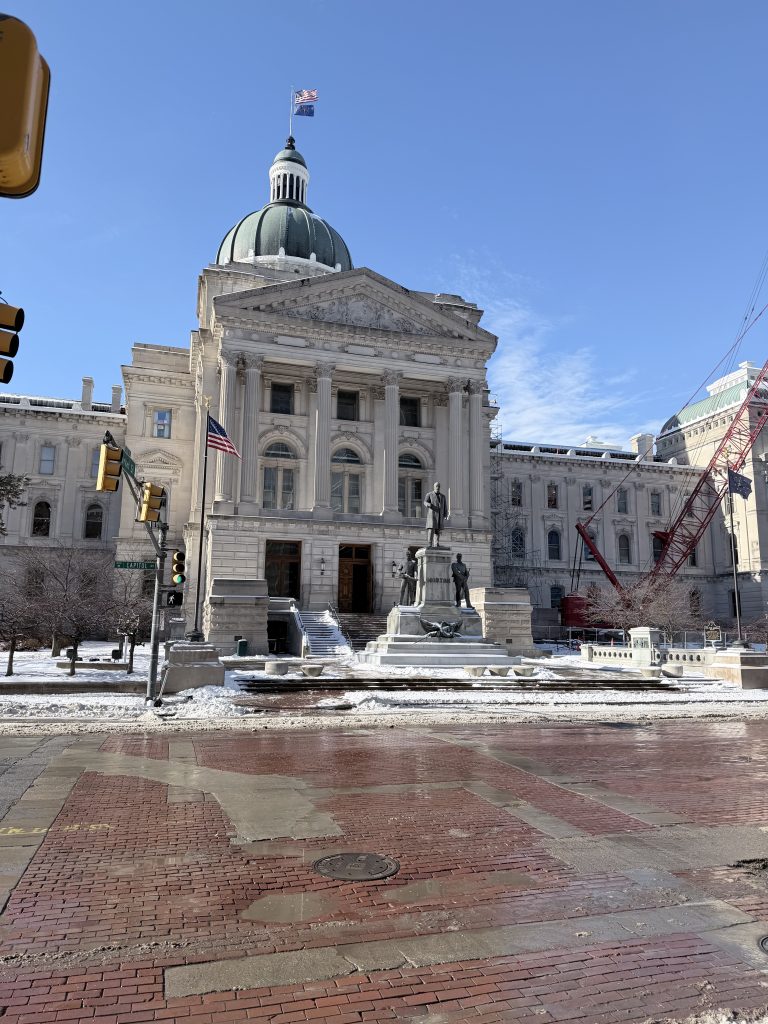
Indianapolis, IN
Brian was in Indianapolis in December, enjoying single digit temperatures, for a presentation to Commercial Construction leaders.
Interesting Finds
Maui advances bill to eliminate many short-term rentals by 2030 – Kathleen Wong
Record Number of Offices to Be Converted to Apartments in 2024 – Nazmul Ahasan
The Economy in Place – Harvard Kennedy School
Why Europe should resist the Second China Shock – Noah Smith